
Multi-level online meeting, support & connectivity platform
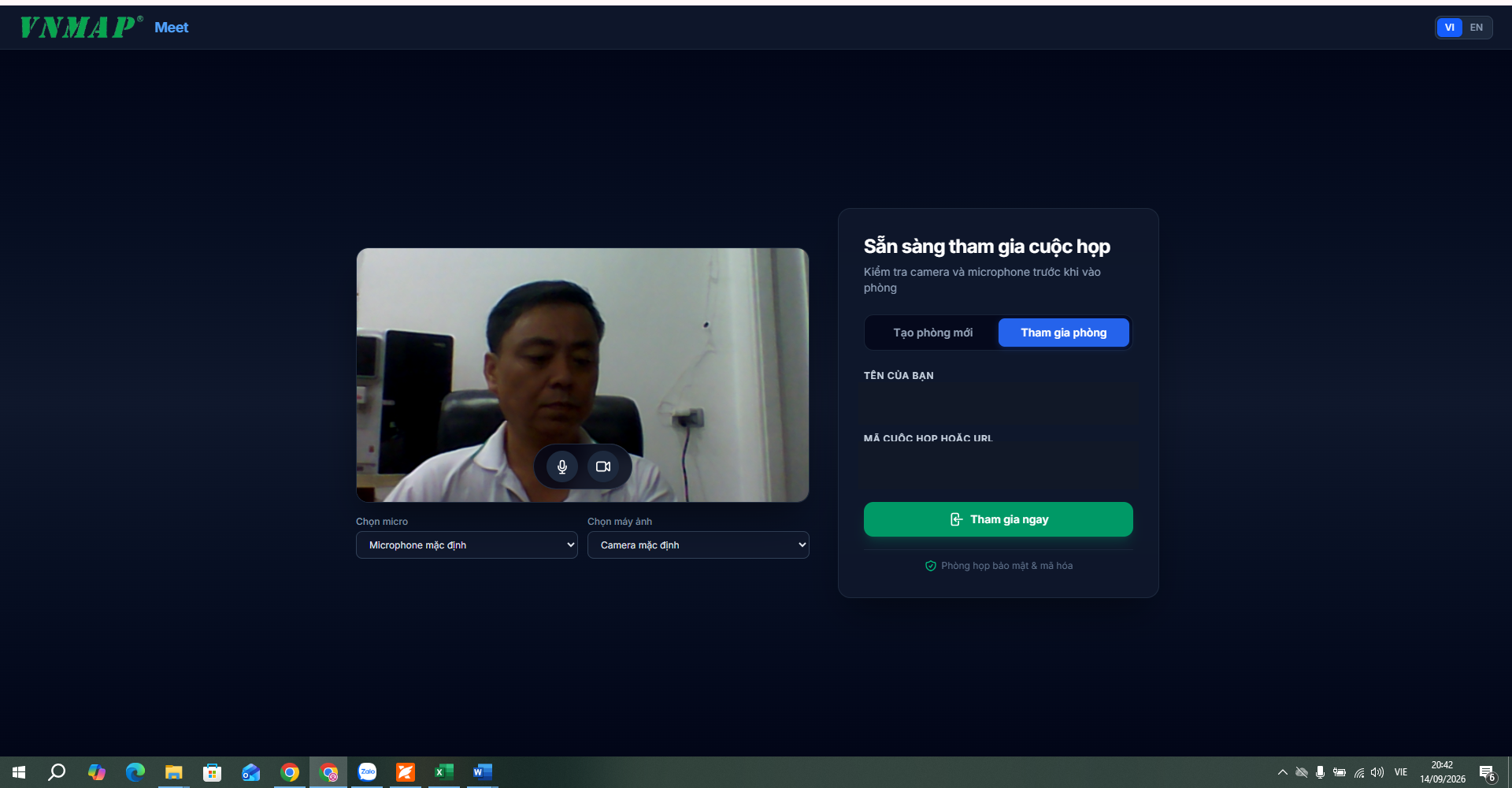
meet.vnmap.ai is a browser-based online meeting and support platform designed for government agencies, organizations, enterprises, and distributed service point networks. The solution enables online meetings, remote support, screen/document sharing, recording, and multi-tier governance, while serving as a "human bridge" in the VNMAP ecosystem when users need direct support from officers or specialists.
Join via web browser; reduce reliance on application installations.
Concurrent operational capacity based on current system specifications.
Manage across province → commune/ward → hamlet/neighborhood or organizational hierarchy.
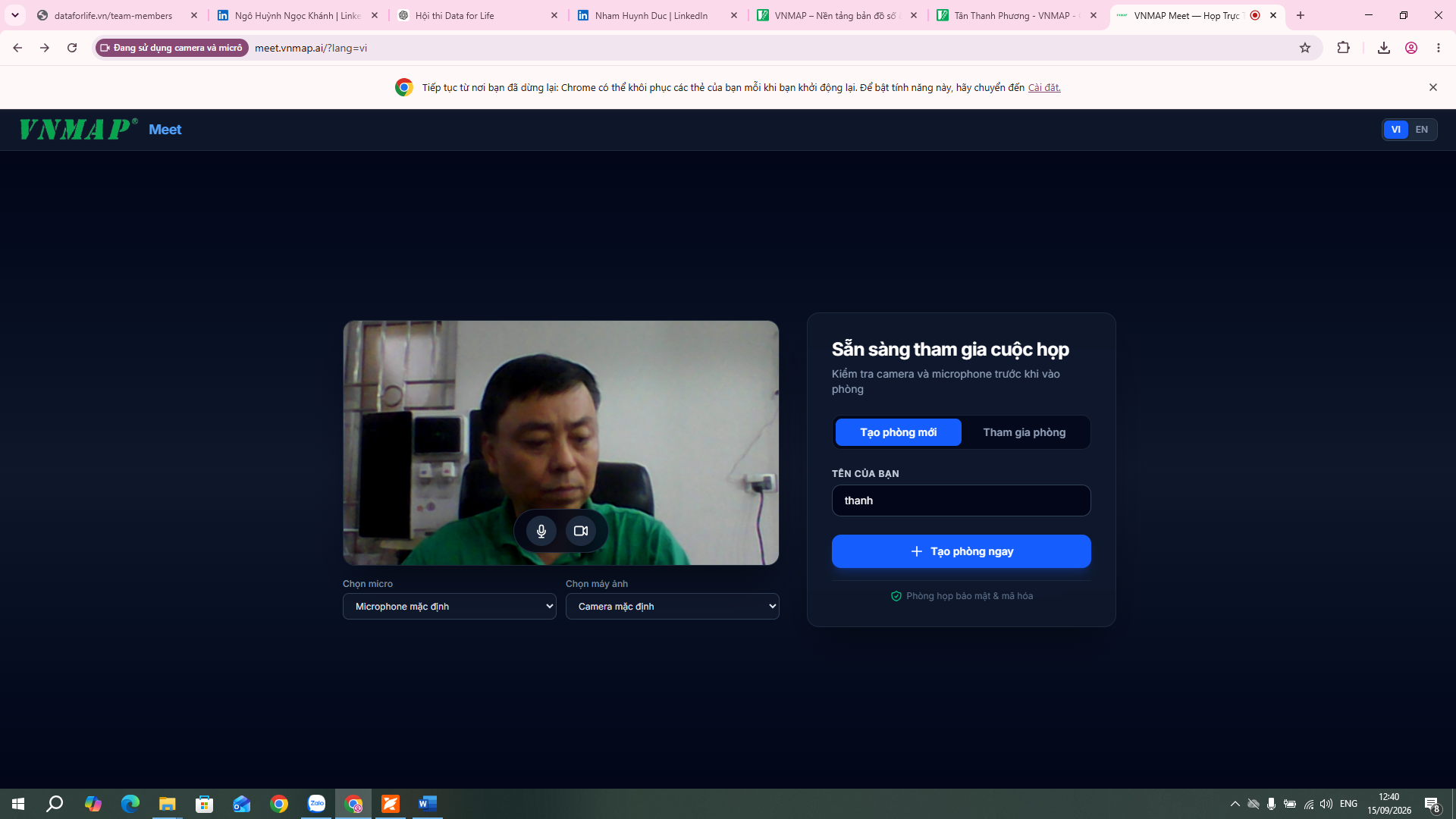
More than online meetings — connecting the right people, at the right level, at the right time.
Online meetings are more than just “seeing and hearing each other”
For organizations with multiple administrative tiers, locations, and user groups, the true challenge is organizing connectivity, coordination, support, and unified governance.
Five practical bottlenecks
Operational meetings, training, directives, and specialist support increasingly require multi-location connectivity, yet traditional meeting room setups often depend on dedicated hardware, specialized rooms, and technical personnel.
At the grassroots level, the need goes beyond scheduled meetings to rapid connections between specialist officers and communes/wards, hamlets/neighborhoods, public service points, or citizens when assistance is required.
Mainstream meeting platforms handle general video calls well, but government operations require organization by administrative tier, unit groups, service points, and governance privileges.
Screen sharing, document collaboration, session recording, and room access control must be organized into unified, intuitive, and scalable workflows.
The greatest value at the grassroots level is bridging geographical distance and delivering specialist expertise from the center directly to where support is needed.
From “online meetings” to “multi-tier online connectivity and support infrastructure”.
Three connectivity pillars
Connectivity
From center to grassroots, from officers to service points.
Coordination
Meetings, training, document sharing, and operational support.
Governance
Organize users, meeting rooms, and connection points by structure.
MEET.VNMAP.AI - One platform, diverse connectivity scenarios
Deploy independently for online meetings or integrate into service points, kiosks, and remote assistance workflows.
| Scenario | Usage | Value |
|---|---|---|
| Operational meetings | Connect multiple departments and bridge locations. | Reduce travel; accelerate discussions and directives. |
| Training | Single focal point instructing multiple communes/wards and hamlets/neighborhoods. | Scale training reach; share screens and documents. |
| Specialist support | Grassroots points initiate calls to officers/specialists as needed. | Bring specialist expertise closer to users. |
| Public administration | Connect citizens at kiosks/service points to remote officers. | Human-in-the-loop when AI or citizens need assistance. |
| Organizations/enterprises | Internal meetings, partners, and distributed project teams. | A unified online collaboration channel. |
Five core capabilities
Browser-first operation; compatible with PCs, laptops, and endpoint terminals equipped with supported browsers, cameras, and microphones.
Organize meeting rooms, bridge multiple participants/locations, and share screens and documents during sessions.
Support session recording based on feature configuration and usage policies.
Enable multi-tier governance by levels or groups, such as province → commune/ward → hamlet/neighborhood or equivalent structures.
Integrate as an online support endpoint on VNMAP AI ONE kiosks.
MEET.VNMAP.AI = MEETINGS + REMOTE SUPPORT + MULTI-TIER CONNECTIVITY + HUMAN-IN-THE-LOOP
Web-first Architecture — Focused on Connectivity
Users experience a straightforward meeting room; behind it operate session, media, access control, and governance layers.
Officers, leadership, specialists, citizens, or terminal devices tailored to each scenario.
Room creation/routing, participant management, and real-time session state.
Audio, video, screen and document sharing; session recording based on configuration.
Unit grouping, tier hierarchy, permission configuration, and operational oversight.
Connect from kiosks/robots or external apps for live support when human intervention is required.
Scale by endpoints and user counts; current validated operational capacity supports 1,500 concurrent users.
Three architecture principles
Minimize onboarding friction and eliminate client software installation dependencies.
Decouple meeting, governance, and integration layers for scalable extensibility.
Technology serves as the bridge; qualified personnel resolve complex expertise needs.
From a single link to a complete working session
The experience simplifies user interaction, especially for grassroots participants less accustomed to video conferencing tools.
Receive link / select room
Access the assigned meeting room or connection point.
Check devices
Browser configures camera, microphone, and speaker based on user permissions.
Join session
Enter the room according to configured roles and admission control mechanisms.
Collaborate
High-definition audio and video for meetings, consultations, training, or support.
Share
Share screens and documents for collaborative review and document processing.
Record when needed
Archive session according to configured features, permissions, and deployment policies.
Conclude / manage
End session, archive session data, and retain operational audit information.
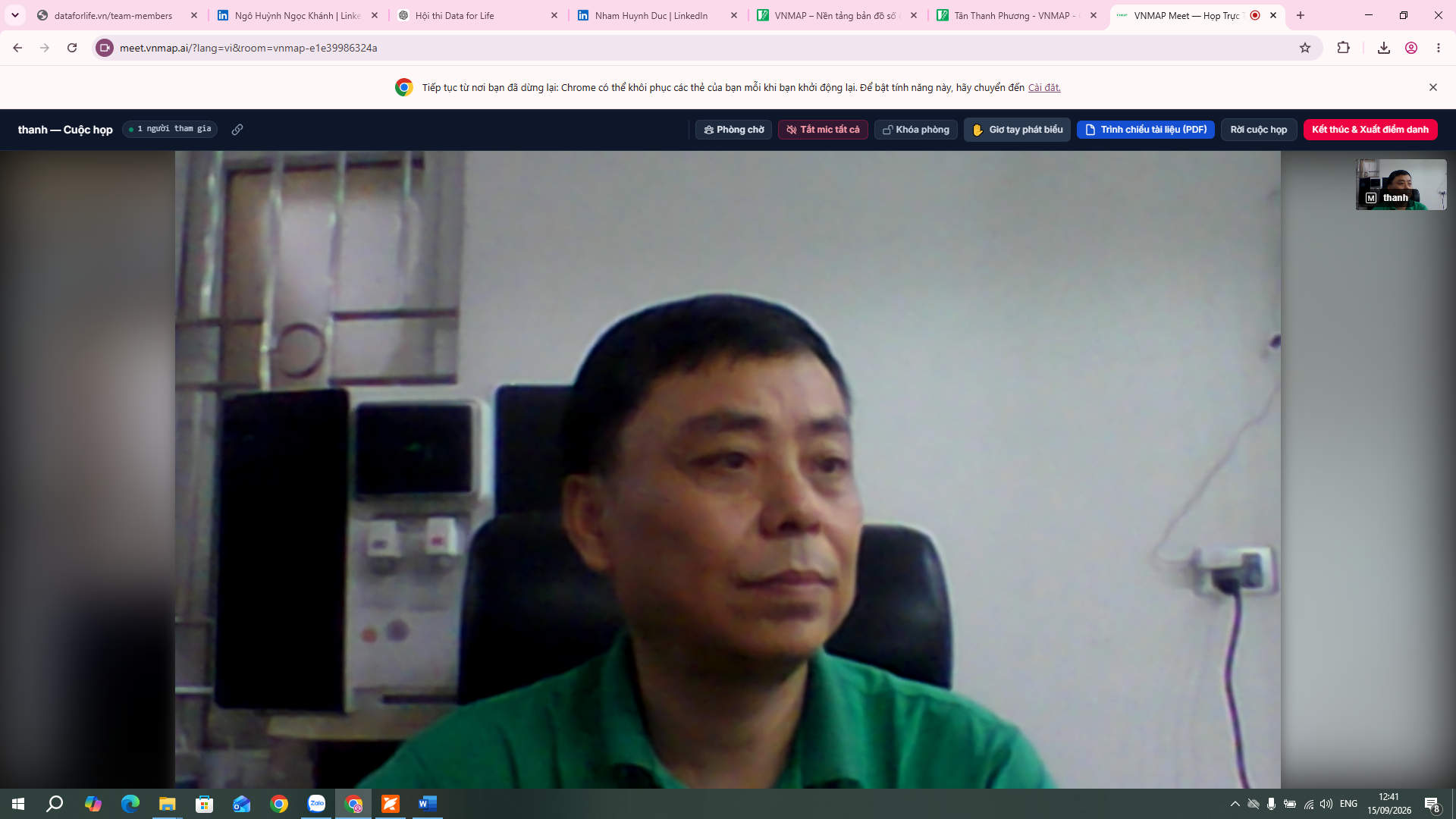
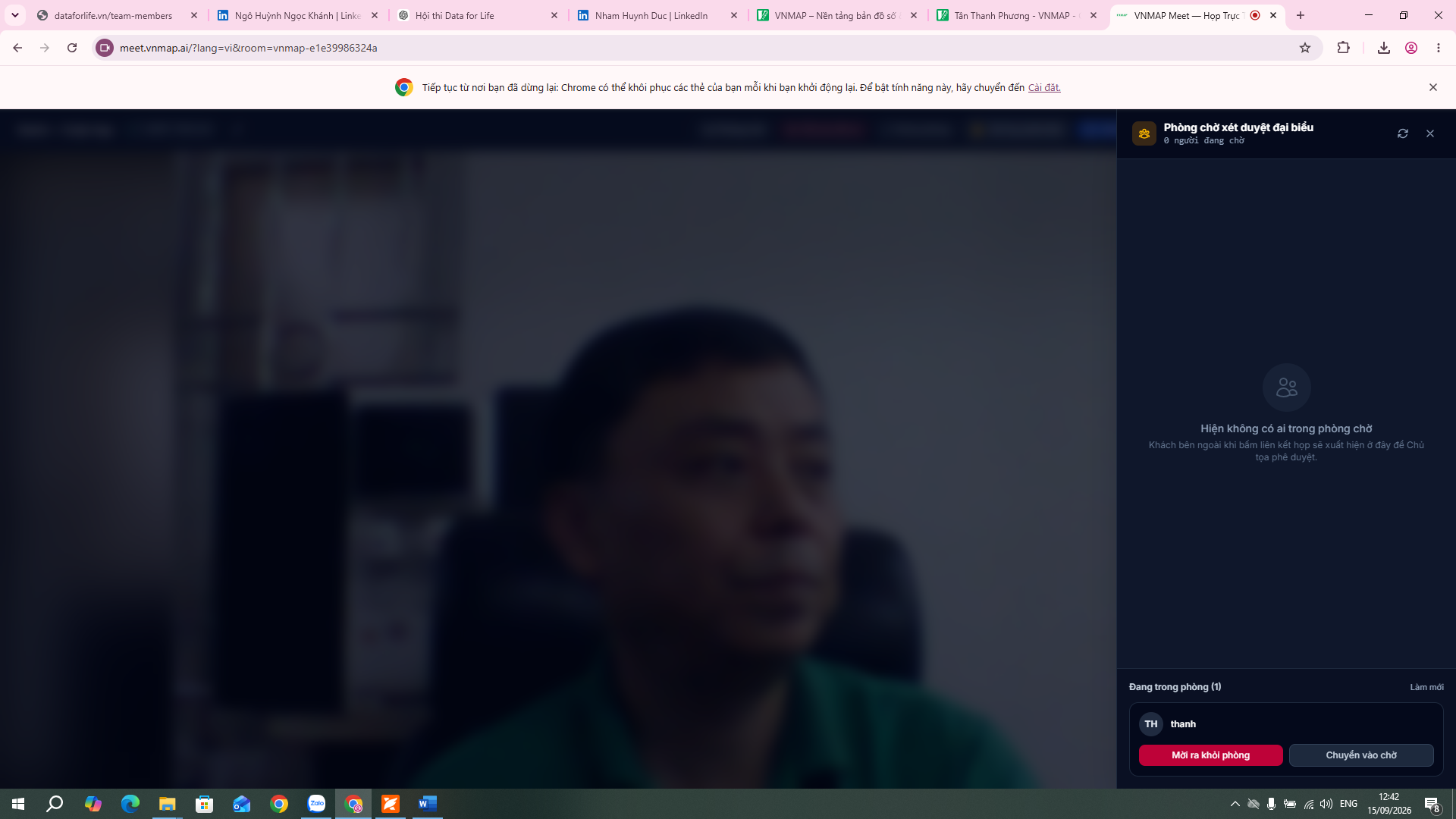
GOAL: FAST JOIN - CLEAR VIDEO - CLEAR AUDIO - EASY SHARING - CONNECT THE RIGHT PEOPLE.
From province/central unit to communes/wards and hamlets/neighborhoods
The key differentiator is not the grid of video tiles, but the capability to organize connection points around administrative structures.
Center / Provincial level
Department / Sector unit
Commune / Ward
Hamlet / Neighborhood / Service point
Five governance points
Organize accounts, groups, and meeting rooms by administrative unit or level, configurable to organizational hierarchies.
Empower a central command to coordinate multiple bridge endpoints for briefings, training, meetings, or specialist support.
Hamlets and neighborhoods can leverage kiosks or standard terminals as online endpoints, reducing the need for dedicated conference rooms everywhere.
A unified platform eliminates tool fragmentation across administrative levels, simplifying operational procedures and user onboarding.
For large-scale deployments, clear permission boundaries separate system administrators, unit managers, room hosts, and participants.
Three governance values
Network Visibility
Structure connection points by unit and administrative tier.
Centralized Coordination
A single session efficiently serves multiple endpoints.
Controlled Expansion
Add units and endpoints aligned with structure and permissions.
MEET.VNMAP.AI — The “Human Bridge” in Digital Public Services
When AI lacks precedent, citizens encounter exceptions, or official authority is required, the system must transition seamlessly to human officers.
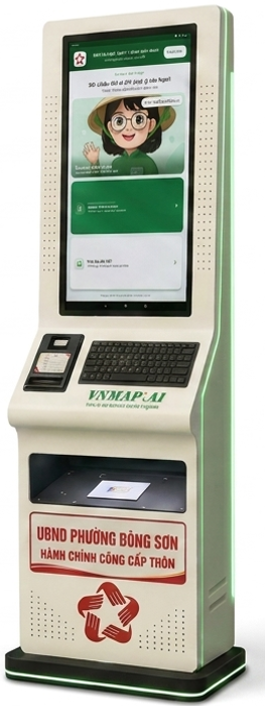
Five public service points
At public service kiosks or administrative points, citizens can activate a connection button to call remote officers according to deployment workflows.
Officers assist remotely via live video, reducing the need for citizens to travel long distances solely for procedural clarification.
Within VNMAP AI ONE, meet.vnmap.ai serves as the HUMAN layer: AI handles lookup and general guidance; human officers resolve exceptions, specialized procedures, and authoritative matters.
Well-suited for communes/wards, hamlets/neighborhoods, mobile service points, or regions where specialized officers cannot be stationed permanently.
The solution does not replace public officers; its objective is to broaden access to qualified personnel through online channels.
Three human roles
AI
Instant, 24/7, handles repetitive queries.
MEET
Bridges smoothly to live remote support sessions.
Human
Resolves exceptions, complex procedures, and authoritative matters.
AI does not replace humans. MEET.VNMAP.AI helps humans appear at the right moment, even from afar.
Session Security, Role-Based Access & Operational Governance
Online conferencing in public bodies and organizations must be governed as an information system, not merely as a consumer video call application.
Four security pillars
IDENTITY & ROLE
Who is admitted, in which role.
SESSION CONTROL
Who is permitted to speak, share, or record.
LOG & AUDIT
Comprehensive tracking of operational and access events.
DATA POLICY
Session metadata, recording assets, and retention schedules.
Six security & operational principles
Strict separation between system administrator, unit manager / room host, and participant roles across deployment tiers.
Granular admission controls over room entry, camera, microphone, screen/document sharing, and session recording permissions.
Enforce encrypted transport, rigorous authentication, authorization policies, and comprehensive log/audit mechanisms tailored to host infrastructure.
Session recording requires explicit data policies governing recording intent, access entitlements, retention windows, and custodial accountability.
Meetings involving state secrets or classified data must be evaluated and deployed in compliance with statutory requirements, regulatory frameworks, and dedicated infrastructure; public Internet platforms must never be presumed suitable for all classification levels.
For public kiosks and unattended terminals, implement automatic session termination, logout safeguards, and local data purging upon session close.
PRINCIPLE: RIGHT PERSON - RIGHT ROOM - RIGHT PRIVILEGE - RIGHT DATA POLICY.
Notice: Do not claim meet.vnmap.ai has achieved specific cybersecurity certification levels without formal assessment documentation.
Measuring Real Experience & Deployment Models
Pilots evaluate media quality, connection stability, join ease, support efficiency, and operational capacity.
9 KPI Measurement Framework
JOIN SUCCESS RATE
Percentage of participants who successfully join meeting rooms.
TIME-TO-JOIN
Elapsed time from opening the link to entering the active session.
AUDIO/VIDEO QUALITY
Percentage of sessions meeting audio/video clarity benchmarks.
SESSION STABILITY
Drop rate, connection failures, reconnection time, and disruption duration.
SCREEN/DOC SHARE
Success rate of screen/document sharing and observed rendering latency.
CONCURRENT LOAD
Stress testing against the current validated capacity of 1,500 concurrent users.
SUPPORT RESOLUTION
Ratio of support sessions resolved without requiring channel redirection or travel.
USER SATISFACTION
Ease of joining, audiovisual clarity, UI intuitiveness, and user satisfaction.
OPERATIONS
System uptime, incident response, recovery times, log completeness, and tech support.
Pilot implementation cycle
Recommendation: Establish distinct KPI benchmarks tailored to network environments and endpoint hardware; do not generalize a single standard across all regions.
Three Core Deployment Models
Government Agencies
Briefings, executive directives, staff training, and multi-tier specialist support.
Public Administration
Connecting remote officers directly to service kiosks and local public counters.
Organizations & Enterprises
Conferencing, corporate training, project collaboration, and distributed network operations.
Five Deployment Phases
Survey
Assess unit/endpoint counts, user groups, meeting/support scenarios, network readiness, and hardware.
Configuration
Configure governance hierarchy, accounts/groups, room privileges, recording rules, and operational policies.
Pilot
Conduct field testing across representative endpoints with high, moderate, and constrained bandwidth environments.
Integration
Interface with kiosks/robots, internal portals, or government backends subject to authorization and technical feasibility.
Scale
Expand across provinces/departments/grassroots facilities with continuous load monitoring, quality assurance, and technical support.
MEET.VNMAP.AI does not merely shorten the distance between two screens. It bridges the gap between those who need support and those equipped to resolve it.
Ready to build digital connectivity infrastructure for your organization?
Contact us to assess your organization, infrastructure, and meeting or support scenarios for a meet.vnmap.ai pilot.
Request a consultation